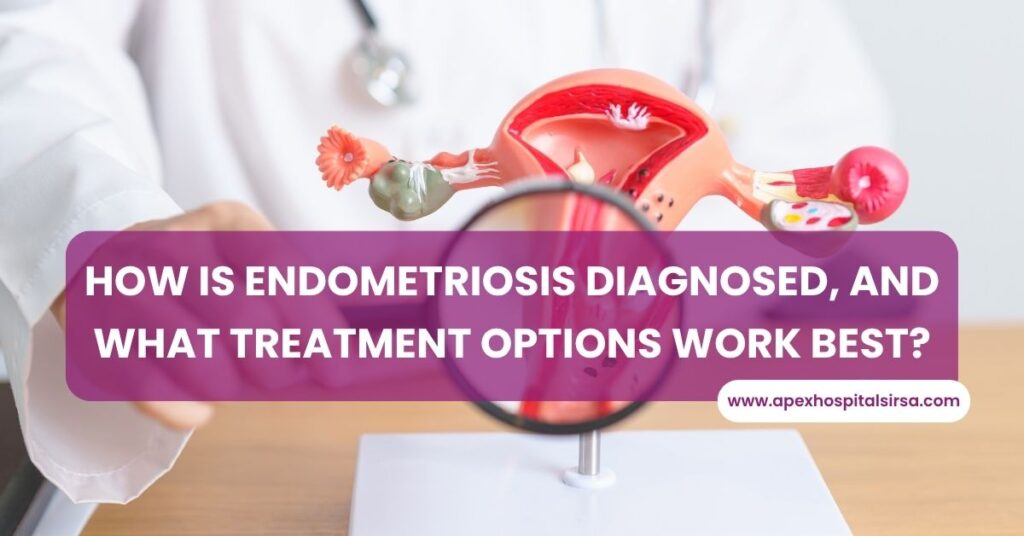
Endometriosis won’t show up on a routine blood test. Getting to the bottom of it takes a careful, step by step clinical process. It starts with a pelvic exam, moves into imaging like an ultrasound or MRI, and when those still don’t give a clear enough answer, a laparoscopy goes in to actually look at the tissue. Every woman experiences this disease differently. That’s why there is no single protocol that fits everyone. The approach is built around what that specific patient needs most at that point in time. For some, the immediate focus is getting chronic pain under control. For others, it’s about preserving fertility for the future.
According to Dr. Manisha Mehta, IVF doctor in Haryana, “Women often spend years being told their severe period pain is just normal. It is not. If your cramps are making you miss work, that demands a real workup, not just another painkiller prescription.”
What does the diagnostic workup actually involve?
The process moves from a clinical exam to imaging, and finally to surgery.
- Clinical exam: A detailed pain history and a manual pelvic exam check for tender nodules and abnormal tissue. This is often where the first real clues surface.
- Ultrasound: A transvaginal scan picks up ovarian cysts well. Smaller implants on the pelvic lining? Not so much.
- MRI: Brought in when the ultrasound leaves questions unanswered, or when deep bowel involvement needs to be ruled out.
- Diagnostic laparoscopy: Scans only show so much. Placing a camera inside the pelvis is the only way to definitively see and stage the disease before starting infertility treatment.
Which treatment approach fits different patient goals?
The treatment plan looks different for every patient. It really comes down to one question: is the priority getting the pain under control, or is it getting pregnant?
- Hormonal therapy: For most women focused on symptom relief, this is where things start. Oral contraceptives and progestins suppress the implants and bring daily pain down to something actually manageable.
- Surgical excision: Medication has its limits. When it stops being enough, when a large endometrioma shows up on a scan, or when conception isn’t happening, surgery becomes the more appropriate next step.
- Fertility restoration: When pregnancy is the goal, the whole purpose of surgery shifts. Pain management steps aside. The focus becomes clearing blocked tubes and removing scar tissue so the body has a genuine shot at natural conception.
Sometimes the damage to the ovaries or tubes runs too deep for natural conception to be realistic. IVF tends to offer the best chance in those cases. Many women get here after years of investigating unexplained infertility, only to find endometriosis was behind it all along.
Frequently Asked Questions
Can endometriosis be found without surgery?
Scans help narrow things down, but they rarely tell the full story. A laparoscopy is still the only way to look inside the pelvis and confirm what’s actually there.
Does endometriosis always cause infertility?
Not at all. Many women with endometriosis conceive naturally. But it does make things harder when implants have reached the ovaries or left scarring around the fallopian tubes.
Will hormonal pills cure the disease?
No. They keep symptoms manageable, but once stopped the pain tends to return. They control the condition rather than clear it.
When is surgery the better option?
When hormonal therapy stops pulling its weight, or when the priority shifts from pain relief to fertility. Surgery becomes the right conversation at that point.
References
Disclaimer: This article is for general educational purposes only and does not replace professional medical advice. Please consult a qualified doctor for personal medical guidance.