Male Infertility
- Home
- Male Infertility
Male Infertility Treatment in Sirsa, Haryana
Expert Diagnosis & Advanced Treatment | PESA · TESA · Varicocelectomy · ICSI | 25 Years of Trust
Male infertility is more common than most people realise — and in Sirsa and across Haryana, it’s still among the most under-discussed reasons why couples struggle to conceive. Roughly 40 to 50 per cent of infertility cases have a male factor involved. Yet a large number of men arrive at Apex Hospital only after their partner has already undergone repeated investigations. The good news is that most causes of male infertility are treatable, especially when identified early.
At Apex Hospital in Sirsa, male infertility is treated as a shared concern — not a secondary one. Dr. R.K. Mehta, our Founder and Chief Surgeon, leads all surgical sperm retrieval procedures and male fertility evaluations. Dr. Manisha Mehta, our IVF specialist and gynaecologist, manages the IVF and ICSI cycles that follow. When both partners need evaluation, it happens in a single visit, under one roof. That level of coordination is rare — and it makes a measurable difference in outcomes.
Book Your Appointment at Apex Hospital | Call: +91 91680 39000 |
When Should the Male Partner Be Evaluated?
Many couples spend months — sometimes years — investigating only the female side before someone thinks to assess the male partner. At Apex Hospital, we recommend that both partners be evaluated simultaneously from the very first consultation. It saves time, reduces emotional burden, and often reveals a correctable cause much sooner.
You should consult a specialist for male fertility evaluation if:
- You and your partner have been trying to conceive for 12 months or more without success
- A semen analysis has shown low sperm count, poor motility, or abnormal morphology
- You’ve been diagnosed with azoospermia (no sperm in the ejaculate)
- Previous IVF or IUI cycles have failed — especially where fertilisation was poor
- You’ve had a history of mumps, undescended testes, testicular injury, or hernia surgery
- You have known varicocele, or swelling or discomfort in the scrotum
- You have hormonal imbalances, thyroid issues, or a history of chronic illness
Don’t wait for the problem to get worse. Early evaluation almost always leads to better treatment options.
Don’t ignore the male side. Get a Free Consultation Today | Call: +91 91680 39000
Common Causes of Male Infertility We Diagnose and Treat
Male infertility doesn’t always look the same. The causes can range from structural problems to hormonal imbalances, lifestyle factors, or genetic conditions. At Apex Hospital, we run a thorough diagnostic workup before recommending any treatment — because the right cause determines the right solution.
Varicocele
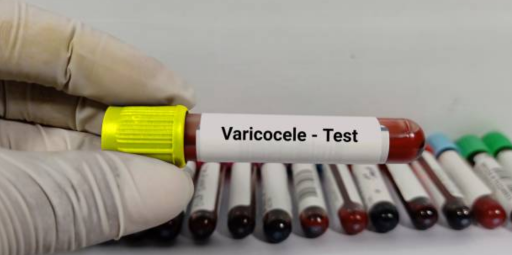
A varicocele — enlarged veins in the scrotum — is the single most common correctable cause of male infertility. These veins raise the temperature inside the scrotum, which gradually damages sperm production and quality over time. Many men don’t know they have it until a fertility workup reveals it. Surgical correction through varicocelectomy significantly improves sperm count, motility, and morphology, particularly in men under 40.
Azoospermia — Obstructive and Non-Obstructive
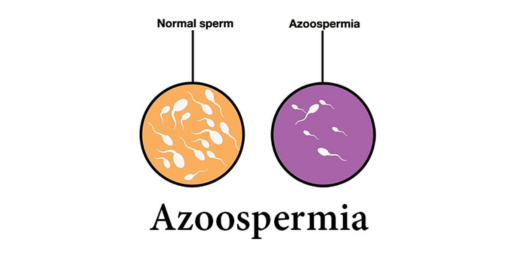
Azoospermia means there is no sperm in the ejaculate. It can happen because of a blockage in the reproductive tract (obstructive) or because the testes aren’t producing sperm in adequate quantities (non-obstructive). Both types can be addressed at Apex Hospital using PESA and TESA respectively — minimally invasive procedures performed by Dr. R.K. Mehta.
Poor Sperm Quality — Count, Motility, Morphology
A semen analysis may show low sperm count (oligospermia), poor forward movement (asthenospermia), or abnormally shaped sperm (teratospermia). These conditions affect the sperm’s ability to fertilise an egg naturally and can also reduce IVF outcomes unless addressed. Depending on the severity, treatment ranges from hormonal therapy to lifestyle intervention to ICSI.
Sperm DNA Fragmentation
A semen report can appear entirely normal and still contain significant DNA damage within the sperm. High sperm DNA fragmentation is one of the most overlooked causes of failed IVF cycles and recurrent early pregnancy loss. A dedicated DNA fragmentation test is part of our evaluation protocol for men who have had repeated failed cycles or unexplained fertilisation failure.
Hormonal Imbalances

Low testosterone, elevated FSH or LH, thyroid dysfunction, and hyperprolactinaemia can all suppress sperm production. These are medical conditions that respond well to targeted treatment — but they’re often missed in a standard semen analysis alone. Hormonal evaluation is always part of our male infertility workup.
Infections and Lifestyle Factors

Untreated genital infections, past STIs, excessive heat exposure, smoking, alcohol, anabolic steroid use, and chronic obesity can significantly impair sperm production and quality. These factors are often reversible with the right guidance and treatment.
How We Diagnose Male Infertility at Apex Hospital in haryana
Our diagnostic approach is methodical and comprehensive. We don’t rely on a single test or assume a cause without evidence. Every evaluation includes:
- Complete semen analysis — count, motility, morphology, volume, and liquefaction
- Sperm DNA fragmentation test — especially for men with prior IVF failure or recurrent loss
- Hormonal blood panel — FSH, LH, testosterone, prolactin, thyroid function
- Scrotal ultrasound — to detect varicocele, testicular abnormalities, or obstructions
- Genetic testing — in selected cases of severe azoospermia (Y-chromosome microdeletion, karyotype)
- Clinical examination by Dr. R.K. Mehta — because imaging and tests tell you what; the doctor’s examination tells you why
Based on the findings, a treatment plan is built specifically for you — not a template applied to every case.
Male Infertility Procedures at a Glance
| Procedure | Condition Treated | Performed By |
|---|---|---|
| Semen Analysis | Sperm count, motility, morphology evaluation | Lab — Apex Hospital |
| Sperm DNA Fragmentation Test | DNA damage in sperm affecting IVF outcomes | Lab — Apex Hospital |
| Varicocelectomy | Varicocele — enlarged scrotal veins | Dr. R.K. Mehta |
| PESA | Obstructive azoospermia (blockage) | Dr. R.K. Mehta |
| TESA | Non-obstructive azoospermia | Dr. R.K. Mehta |
| Hormonal Evaluation & Treatment | Low testosterone, FSH/LH imbalance | Dr. R.K. Mehta |
| IVF + ICSI | Severe male factor infertility | Dr. Manisha Mehta + Dr. R.K. Mehta |
Coordinated Care — Both Partners, One Roof
One of Apex Hospital’s clearest advantages in male infertility treatment is the coordination between Dr. R.K. Mehta and Dr. Manisha Mehta. Dr. Mehta performs the surgical sperm retrieval — PESA, TESA, and varicocelectomy — while Dr. Manisha Mehta manages the IVF and ICSI cycle for the female partner. When sperm is retrieved in the morning, it can be used in the same cycle on the same day.
For couples dealing with male infertility in Haryana and surrounding areas — Fatehabad, Hanumangarh, Ellenabad, Bathinda, Abohar — this means everything is available in one place. No travelling to separate clinics. No miscommunication between teams. No delays.
We also see patients from Rajasthan through our Hanumangarh branch, where consultations and initial evaluations are available, with complex surgical cases handled at the Sirsa flagship centre.
Explore male infertility treatment options — PESA, TESA, varicocelectomy, ICSI, and IVF — coordinated under one roof
Led by Dr. R.K. Mehta — Founder & Chief Surgeon
Dr. R.K. Mehta is the Founder and Managing Director of Apex Hospital. Holding MS, DNB, FIAGES, FAIS, FMAS, MNAMS, and MIMSA qualifications, he trained at premier institutions including PGIMS Rohtak, Escorts Heart Institute, and Safdarjung Hospital, New Delhi.
Over more than 25 years, he has built a reputation not just for surgical precision, but for ethical, compassionate practice. He established Apex IVF Centre in Sirsa in 2011, bringing male infertility surgery — TESA, PESA, varicocelectomy — directly into the fertility care pathway for the first time in this region. He’s also a faculty trainer at ReproLearn, Apex Hospital’s FOGSI-recognised training institute for infertility and laparoscopic surgery.
- Pioneer of TESA and PESA in the Sirsa–Haryana region
- 25+ years of surgical experience in urology and laparoscopy
- Recipient: Doctors Pride Award, Dainik Bhaskar 2021
- Recognised: Six Sigma Best IVF Centre North India 2022
- Faculty trainer at ReproLearn — FOGSI-certified infertility training programme
“Every urological condition has a solution if you approach it with precision and patience. At Apex Hospital, we don’t rush diagnosis. We find the right answer first — and then we treat it.”
— Dr. R.K. Mehta, Founder & Chief Surgeon, Apex Hospital
Related Services at Apex Hospital
➤ IVF Centre in Haryana — Advanced Fertility Treatments
➤ ICSI Treatment in Sirsa — Intracytoplasmic Sperm Injection
➤ Urology Hospital in Sirsa — PCNL, TURP, PESA, TESA & More
➤ Repeated IVF Failure Treatment in Sirsa — Root Cause Evaluation
➤ IUI Treatment in Sirsa — First-Step Fertility Care
➤ Dr. R.K. Mehta — Surgeon & Urologist Profile
➤ ReproLearn — FOGSI-Certified IVF Training Institute
ICSI
Ovarian stimulation and egg collection in ICSI (intracytoplasmic sperm injection) and IVF are exactly the same. However, in an ICSI cycle each suitable mature egg is injected with a single prepared sperm cell.
TESA, PESA & MESA
The usual way of producing sperm for use in Assisted Reproductive Technology is manual stimulation. In cases where medical or religious factors prevent this, surgical methods can be used.
FAQs
Varicocele — enlarged veins in the scrotum — is the most common correctable cause. It’s present in around 35–40% of infertile men and can be surgically treated. Other common causes include low sperm count, poor motility, hormonal imbalances, and azoospermia.
Yes, in many cases. If the cause is obstructive (a blockage), sperm can be retrieved using PESA. If it is non-obstructive, TESA is used to extract sperm directly from testicular tissue. The retrieved sperm is then used with ICSI for fertilisation. Apex Hospital has helped many azoospermic couples achieve successful pregnancies using these techniques.
Not always. For mild male factor infertility — low count with reasonable motility — IUI may be the first step. For moderate to severe cases, ICSI is the gold standard. For men with azoospermia requiring PESA or TESA, ICSI is always used alongside sperm retrieval.
Yes. A standard semen analysis measures count, motility, and morphology — but it does not measure sperm DNA integrity. High sperm DNA fragmentation can cause poor fertilisation, poor embryo development, and repeated IVF failure, even when the semen report appears normal. We recommend a DNA fragmentation test for men with unexplained infertility or prior IVF failure.
Sperm production takes approximately 74 days to complete a cycle, so most patients see measurable improvements in sperm parameters within three to six months after varicocelectomy. Some men see significant changes by 3 months; others take up to 9 months. The extent of improvement depends on the severity of the varicocele and the baseline sperm parameters.
Yes, and we actively encourage it. Dr. R.K. Mehta evaluates the male partner for urological and sperm-related factors, while Dr. Manisha Mehta assesses the female partner. Having both evaluations in one visit is more efficient, reduces the emotional burden of separate appointments, and helps us build a joint treatment plan much faster.
Call Apex Hospital at +91 91680 39000, or fill out the appointment form at apexhospitalsirsa.com/contact. You can also reach us on WhatsApp for a quick enquiry. Our team will schedule you at the Sirsa or Hanumangarh centre depending on your location.
Book Your Appointment at Apex Hospital | Call: +91 91680 39000 |