
That dull ache under your right ribs after a heavy meal isn’t always “just gas.” For a lot of patients, it’s the first sign of gallbladder stones. And most people don’t connect the two until the pain becomes impossible to ignore. Recognising gallbladder stone symptoms early can be the difference between a planned, minimally invasive surgery and a middle-of-the-night emergency room visit.
Apex Hospital see this pattern often: a patient has had mild discomfort for months, brushed it off as acidity, and only comes in once the pain becomes unbearable. So let’s break down what gallbladder stones actually feel like, which symptoms need urgent attention, and when surgery genuinely becomes the right call.
What Are Gallbladder Stones?
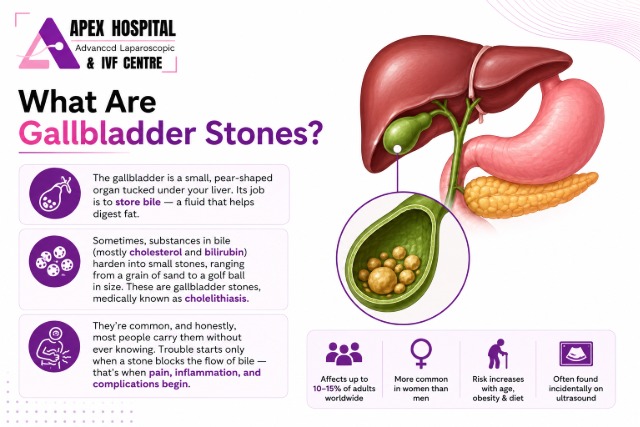
The gallbladder is a small, pear-shaped organ tucked under your liver. Its job is to store bile — a fluid that helps digest fat. Sometimes, substances in bile (mostly cholesterol and bilirubin) harden into small stones, ranging from a grain of sand to a golf ball in size. These are gallbladder stones, medically known as cholelithiasis.
They’re common, and honestly, most people carry them without ever knowing. Trouble starts only when a stone blocks the flow of bile — that’s when pain, inflammation, and complications begin. If you’ve read about struvite stones forming in the kidneys, gallstones follow a similar idea: mineral deposits crystallising where they shouldn’t, just in a different organ with a different set of consequences.
Common Gallbladder Stone Symptoms
When There Are No Symptoms at All
Here’s something patients are often surprised to hear: a large share of gallstones cause no symptoms whatsoever. These are called “silent gallstones,” and according to Mayo Clinic, they usually don’t need treatment unless they start causing problems. Many people find out they have them only during an unrelated ultrasound or scan.
The Warning Signs of a Gallbladder Attack
Once a stone blocks a duct, though, things change quickly. Watch for:
- Sudden, intense pain in the upper right or centre of the abdomen, just below the breastbone
- Pain that spreads to the right shoulder blade or back
- Pain that worsens sharply after fatty or fried meals
- Nausea or vomiting alongside the abdominal pain
- Bloating and indigestion that keeps recurring
- Attacks that last anywhere from a few minutes to several hours
This pattern of pain is sometimes called biliary colic. According to the National Institute of Diabetes and Digestive and Kidney Diseases (NIDDK), gallbladder attacks often strike in the evening or at night, and once you’ve had one, more tend to follow.
When Gallbladder Stones Symptoms Turn Serious
Some symptoms shouldn’t wait for a scheduled appointment. Get medical help immediately if you notice:
- Fever or chills along with abdominal pain
- Yellowing of the skin or eyes (jaundice)
- Dark urine or pale, clay-coloured stools
- Persistent vomiting that won’t settle
- Pain so severe you can’t sit still or find a comfortable position
These can point to complications like an infected gallbladder (cholecystitis), a blocked bile duct, or gallstone-related pancreatitis — all of which need prompt treatment. It’s similar logic to why we tell patients not to sit on unexplained abdominal pain in general; conditions like appendicitis causes can present with overlapping symptoms, which is exactly why a proper diagnosis matters instead of guessing at home.
How Doctors Diagnose Gallbladder Stones
Diagnosis usually starts with a conversation about your symptoms and eating patterns, followed by a physical exam. From there, an ultrasound is typically the first imaging test — it’s quick, painless, and picks up most gallstones reliably. In some cases, we may add blood tests to check for infection or liver involvement, or an MRI if a stone is suspected in the bile duct itself.
When Does Gallbladder Stone Surgery Become Necessary?
This is the question most patients actually want answered: do I need surgery, or can this be managed without it?
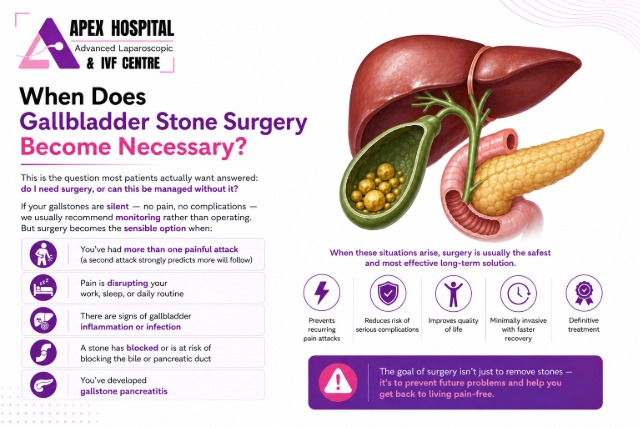
If your gallstones are silent — no pain, no complications — we usually recommend monitoring rather than operating. But surgery becomes the sensible option when:
- You’ve had more than one painful attack (a second attack strongly predicts more will follow)
- Pain is disrupting your work, sleep, or daily routine
- There are signs of gallbladder inflammation or infection
- A stone has blocked or is at risk of blocking the bile or pancreatic duct
- You’ve developed gallstone pancreatitis
At that point, removing the gallbladder — a procedure called a cholecystectomy — isn’t just about pain relief. It’s about preventing repeat attacks and more serious complications down the line.
Laparoscopic Gallbladder Surgery: What to Expect
The good news is that gallbladder stone removal today is almost always done through laparoscopic surgery in Sirsa, Haryana rather than a large open incision. A few small cuts, a camera, and precise instruments let the surgeon remove the gallbladder with far less trauma to the body than older techniques required.
At Apex Hospital, our surgery department is equipped with an advanced three-chip camera system that gives a clearer, more detailed view during these procedures — which translates to shorter operating time, less bleeding, and a faster recovery for the patient. It’s the same minimally invasive approach we use for conditions like different types of hernia repair where precision matters just as much as the outcome.
Most patients go home within a day or two and are back to light routines within a week. If you’re curious about what recovery actually looks like day by day, we’ve covered it in detail in our guide on recovery after laparoscopic gallbladder surgery.
Life After Gallbladder Removal
Here’s some reassurance: the gallbladder isn’t essential for survival. Once it’s removed, bile flows directly from the liver into the intestine instead of being stored first. Most people notice no real change in digestion. A small number may need to adjust fat intake slightly in the first few weeks, but this usually settles on its own.
Frequently Asked Questions
Can gallbladder stones go away on their own?
Rarely. Small stones occasionally pass without symptoms, but most gallstones stay put unless they’re dissolved with medication (a slow process, used only in select cases) or removed surgically.
Is gallbladder stone pain the same as normal stomach pain?
No. Gallstone pain tends to be sharper, centred under the right ribs, often triggered by fatty food, and may radiate to the back or right shoulder — unlike general indigestion.
Do all gallstones need surgery?
No. Silent, symptom-free stones are often just monitored. Surgery is recommended once pain, inflammation, or duct blockage develops.
Is laparoscopic gallbladder surgery safe?
Yes, it’s considered a routine, low-risk procedure with a strong safety record when performed by an experienced surgical team.
How soon can I go back to work after gallbladder surgery?
Most patients resume light activity within a week, though this varies depending on your job and overall health.
Don’t Wait for the Next Attack
If you’ve been getting recurring pain under your right ribs after meals, don’t keep explaining it away as acidity. Gallbladder stone symptoms tend to repeat and worsen, and catching them early keeps your treatment options simpler.
Dr. R.K. Mehta and the surgical team at Apex Hospital, Sirsa, Haryana have performed hundreds of laparoscopic gallbladder procedures with fast, safe recoveries. Get in touch with us to have your symptoms evaluated, or read more about Dr. R.K. Mehta’s surgical expertise.