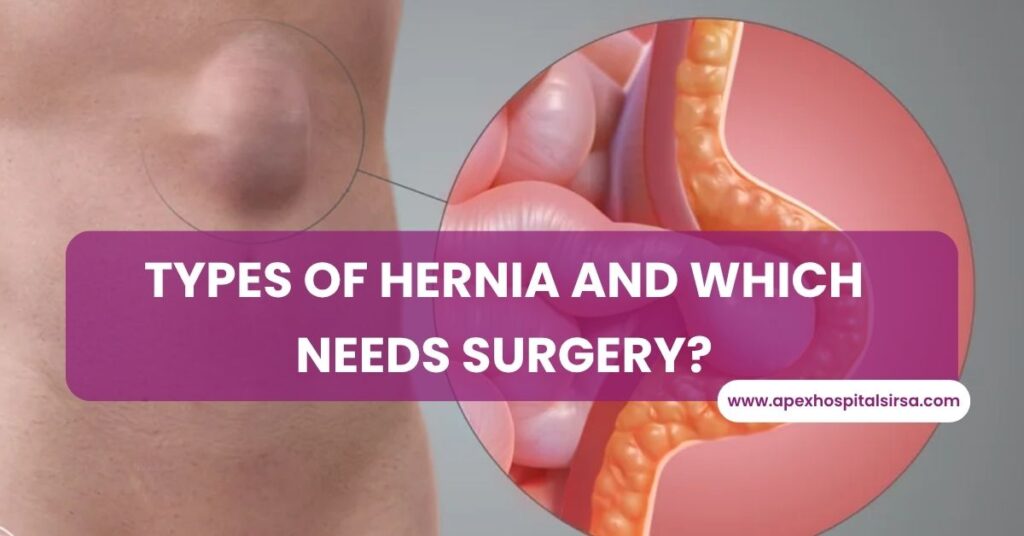
Hernias happen when internal organs push through weak abdominal muscles usually from strain or a weakness you were born with. The main types are Inguinal Femoral Umbilical Incisional and Hiatal. Surgery becomes necessary when the hernia gets trapped or loses its blood supply.
According to Dr. R.K. Mehta, laparoscopic surgeon at Apex hospital, an IVF centre in Sirsa, Haryana, “A small hernia today can turn into a surgical emergency tomorrow so early evaluation always beats waiting it out.”
What are the main types of hernia?
Hernias get named by where they show up on the body. Each type has its own cause and fix.
- Inguinal Most common type affecting mostly men where tissue pushes through the inguinal canal in the groin region often triggered by heavy lifting
- Femoral Rare hernia occurring in the upper thigh near the femoral artery seen mostly in older women and carries higher risk of strangulation
- Umbilical Develops near the belly button common in newborns obese adults and women after multiple pregnancies usually painless but grows larger over time
- Hiatal Stomach slips upward through the diaphragm opening leading to acid reflux chest pain and difficulty swallowing after meals in many cases
Apex handles all major laparoscopic surgery options with quicker recovery.
Which hernia needs surgery?
Not every hernia is a red flag. But some need the operating table. No waiting around.
- Strangulated Blood supply to the trapped tissue gets cut off causing severe pain vomiting and tissue death within hours without urgent surgical fix
- Incarcerated Hernia contents get stuck and cannot be pushed back into the abdomen raising risk of bowel obstruction and needing prompt surgery
- Painful Growing bulge combined with sharp pain nausea vomiting or changes in bowel habits signals urgent need for surgical repair right away
- Large Big incisional or umbilical hernias rarely heal without surgery and often get worse like kidney stones that need direct intervention
Laparoscopic mesh repair means shorter stays. Quicker return to work too.Go for NCBI backs up that minimally invasive methods cut recurrence rates down.
Why Choose Apex Hospital for Hernia Surgery?
Apex Hospital has been fixing hernias since 2001 and Dr. R.K. Mehta brings over two decades of hands on surgical practice to every case.The team uses the Karl Storz three chip tricam endovision system for precise laparoscopic work and most patients walk out the same day.
Honest surgical planning matters here. Nobody pushes unnecessary procedures. No aggressive sales pitch either. The results do the talking.
FAQs
Can a hernia heal without surgery?
No hernias do not heal on their own and usually grow bigger over time.
Is hernia surgery painful?
Laparoscopic repair causes minimal pain with faster recovery than open surgery.
How long is hernia surgery recovery?
Most people get back to light activity within one to two weeks post op.
Can a hernia come back after surgery?
Recurrence is rare with mesh repair but depends on lifestyle and healing.