Your body is growing a life. Most days, that feels ordinary. Some days, it sends a signal that something is off.
Every pregnancy carries some risk. A high risk pregnancy carries more, and it demands faster attention. Knowing the difference between “normal discomfort” and “call the doctor now” can change the outcome for you and your baby. This piece walks through what makes a pregnancy high-risk, which symptoms are red flags at every stage, and when waiting simply isn’t an option.
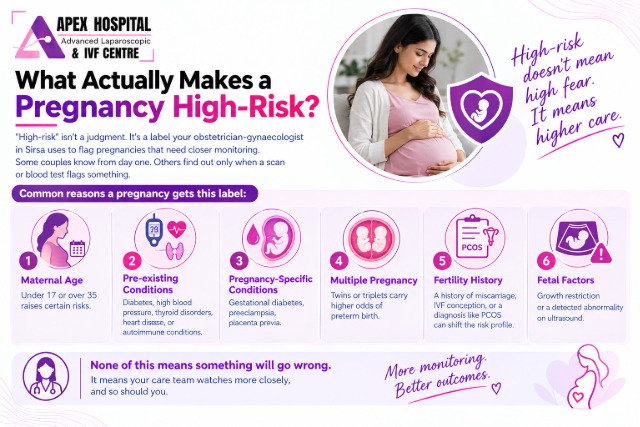
What Actually Makes a Pregnancy High-Risk?
“High-risk” isn’t a judgment. It’s a label your obstetrician-gynaecologist in Sirsa uses to flag pregnancies that need closer monitoring. Some couples know from day one. Others find out only when a scan or blood test flags something.
Common reasons a pregnancy gets this label:
- Maternal age. Under 17 or over 35 raises certain risks.
- Pre-existing conditions. Diabetes, high blood pressure, thyroid disorders, heart disease, or autoimmune conditions.
- Pregnancy-specific conditions. Gestational diabetes, preeclampsia, placenta previa.
- Multiple pregnancy. Twins or triplets carry higher odds of preterm birth.
- Fertility history. A history of miscarriage, IVF conception, or a diagnosis like PCOS can shift the risk profile.
- Fetal factors. Growth restriction or a detected abnormality on ultrasound.
None of this means something will go wrong. It means your care team watches more closely, and so should you.
Warning Signs That Apply at Any Stage
Some symptoms deserve a phone call regardless of how many weeks you are. These aren’t meant to alarm you into treating every twinge as an emergency. They’re meant to help you tell the difference.
Bleeding
Light spotting can happen, especially early on. Heavier bleeding, bleeding with pain, or bleeding after the first trimester is never something to sit on. It can point to conditions like placenta previa or placental abruption, and both need same-day evaluation.
Severe or persistent abdominal pain
Mild cramping is common. Sharp, constant, or one-sided pain is not. It can signal anything from an ectopic pregnancy in early weeks to placental problems later. If cramping doesn’t ease with rest, don’t wait it out.
Severe headache, vision changes, or sudden swelling
A headache that won’t go away, blurred vision, flashing lights, or sudden puffiness in the hands, face, or feet can be early signs of preeclampsia. This condition can escalate quickly, which is exactly why it’s on every urgent-symptom list from ACOG to the CDC.
Fever
A temperature of 100.4°F (38°C) or higher during pregnancy needs medical attention. Infection during pregnancy can affect both mother and baby if left untreated.
Reduced fetal movement
Babies settle into a movement pattern as pregnancy progresses. A noticeable drop, or no movement at all, is one of the clearest reasons to call your OB immediately. Don’t wait for the next scheduled appointment to mention it.
Sudden fluid leakage
A gush or a steady trickle of fluid may mean your water has broken. Before 37 weeks, this raises the risk of infection and preterm labor, and it needs prompt evaluation.
Chest pain or breathlessness
Sudden shortness of breath or chest pain is never normal in pregnancy. It can point to a blood clot, which is a medical emergency.
Persistent vomiting
Morning sickness is common. Vomiting that stops you from keeping down food or fluids for a full day, or that leaves you dehydrated, is a different problem and needs care.
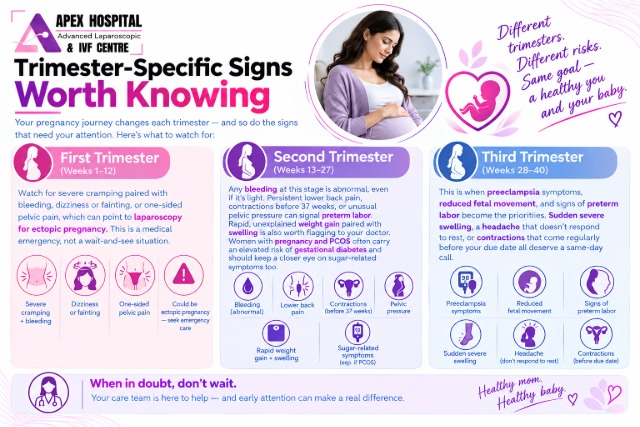
Trimester-Specific Signs Worth Knowing
First trimester
Watch for severe cramping paired with bleeding, dizziness or fainting, or one-sided pelvic pain, which can point to laparoscopy for ectopic pregnancy. This is a medical emergency, not a wait-and-see situation.
Second trimester
Any bleeding at this stage is abnormal, even if it’s light. Persistent lower back pain, contractions before 37 weeks, or unusual pelvic pressure can signal preterm labor. Rapid, unexplained weight gain paired with swelling is also worth flagging to your doctor. Women with pregnancy and PCOS often carry an elevated risk of gestational diabetes and should keep a closer eye on sugar-related symptoms too.
Third trimester
This is when preeclampsia symptoms, reduced fetal movement, and signs of preterm labor become the priorities. Sudden severe swelling, a headache that doesn’t respond to rest, or contractions that come regularly before your due date all deserve a same-day call.
What to Do When a Warning Sign Shows Up
You don’t need to diagnose yourself. You need to act.
- Call first, don’t wait for the next appointment. Obstetricians expect these calls. A false alarm costs a phone conversation. A missed one can cost much more.
- Go straight to the hospital for severe symptoms. Heavy bleeding, severe abdominal pain, chest pain, seizures, or a sudden vision change need emergency evaluation, not a scheduled slot.
- Track what you’re feeling. Note timing, severity, and anything that makes it better or worse. It helps your doctor act faster.
- Trust your instinct. If something feels wrong and you can’t explain why, that’s reason enough to call.
Managing a High-Risk Pregnancy: What Changes
A high-risk label usually means more frequent visits, more detailed scans, and sometimes referral to a maternal-fetal medicine specialist. Depending on the condition, your gynaecologist in Sirsa may recommend extra blood work, closer blood pressure monitoring, or an earlier delivery plan.
If your pregnancy followed fertility treatment, your care team may already be tracking you more closely from the start. That continuity matters. Whoever managed your conception is often best placed to manage the pregnancy that followed, since they already know your history.
Frequently Asked Questions About High-Risk Pregnancy Signs
Does a high-risk pregnancy always mean something will go wrong?
No. It means your doctor is watching more closely because certain factors raise the odds of a complication. Most high-risk pregnancies still end in healthy deliveries.
How is a high-risk pregnancy different from a normal one, day to day?
More frequent appointments, more scans, and closer symptom tracking. Otherwise, daily life often looks similar.
What’s the single most important sign to never ignore?
There isn’t just one. Bleeding, severe pain, reduced fetal movement, and preeclampsia symptoms (headache, vision changes, sudden swelling) are the ones that most consistently need urgent care.
Can stress alone make a pregnancy high-risk?
Stress affects wellbeing, but a high-risk classification is usually tied to a medical condition, age factor, or pregnancy complication, not stress on its own.
Should I call my doctor even if I’m not sure the symptom is serious?
Yes. It’s always safer to ask than to assume it’s nothing.
Where This Leaves You
High risk pregnancy signs aren’t a checklist to memorise and forget. They’re a set of cues your body gives you when something needs a closer look. Bleeding, severe pain, reduced movement, vision changes and swelling, fever, and breathlessness top the list, and none of them are symptoms to sit with quietly.
If you’re pregnant and something feels off, don’t wait for reassurance from the internet. Call Apex Hospital, Sirsa on +91 9619642000, or book a consultation with our obstetrics and gynaecology team and get it checked properly.