Your period was due on the 5th. It arrived on the 19th. Last month it came on time, and the month before it was early. You’ve done a pregnancy test (negative), you’ve googled it twice, and you’re still wondering whether this is normal or something to worry about.
If that sounds familiar, you’re in very good company. Irregular periods are one of the most common reasons women walk into a gynaecologist’s clinic. The good news is that the cause is often something simple and fixable. This guide covers the most common irregular periods causes, how to tell what’s normal, and when it’s time to get checked.
What Counts as an Irregular Period?
The average gap between periods is around 28 days, but a healthy cycle can be shorter or longer. The NHS describes periods as irregular when the gap between them is shorter than 21 days or longer than 35 days. Clinical guidance based on the FIGO classification, summarised by NHS Lothian, uses a normal range of 24 to 38 days and treats a period lasting more than 8 days as prolonged.
Cycle length can vary by a few days from month to month, and that’s fine. It’s the pattern that matters. A cycle that is unpredictable, keeps changing or has suddenly changed deserves attention. A simple habit helps: note the first day of every period in a diary or an app for three months before you see a doctor.

What Are Causes of Irregular Periods? Eight Common Ones
Your cycle depends on a delicate conversation between the brain, ovaries and uterus. Anything that disturbs that conversation can shift your periods. According to the NHS list of causes, the most common are puberty, the approach of menopause, pregnancy, hormonal contraception, lifestyle factors and certain medical conditions. Here is how they look in real life.
1. Puberty
In the first year or two after a girl’s periods begin, cycles are often irregular because the hormonal system is still settling. This is normal and rarely needs treatment.
2. Perimenopause
In the years before menopause, usually between the mid-forties and mid-fifties, ovulation becomes less predictable. Cycles may get shorter, longer, lighter or heavier before they eventually stop.
3. Polycystic ovary syndrome (PCOS)
PCOS is one of the leading causes in women of reproductive age. It disturbs ovulation, so periods come late, rarely or unpredictably. Other clues include acne, excess facial or body hair, weight gain and thinning scalp hair. (The NHS page now also uses the name PMOS for this condition, so you may see both.) Many women confuse PCOS with PCOD, so our guide on the difference between PCOS and PCOD is worth a read.
4. Thyroid problems
An underactive or overactive thyroid can both change your cycle. The NHS notes that thyroid disorders are a possible cause, and a simple blood test can check your thyroid hormone levels. Tiredness, weight changes, feeling too hot or cold, and hair changes can go along with it.
5. Stress
Physical and emotional stress can switch off the signals that trigger ovulation. Exams, a job change, grief, a move or a long illness can all delay a period. The cycle usually settles once the stress passes, but persistent stress needs managing in its own right.
6. Weight changes, diet and over-exercise
Sudden weight loss or gain, crash diets and very intense training can all disrupt hormones. The body can stop ovulating if it senses it isn’t getting enough energy. In Indian clinics we also see this with extreme dieting, skipped meals and rapid weight loss before weddings.
7. Contraception and medicines
Starting or stopping the pill, using an emergency contraceptive pill, having a hormonal IUS or injection, or taking certain other medicines can all change your bleeding pattern. After stopping the pill, it can take a few months for your own cycle to return.
8. Pregnancy, breastfeeding and postpartum changes
A missed or late period is often the first sign of pregnancy, so a pregnancy test is always step one. After delivery, and while breastfeeding, periods can stay absent or irregular for a while.
Less Common but Important Causes
Some causes are less frequent but matter because they need proper treatment:
- Uterine fibroids and polyps can cause irregular or heavy bleeding. See our guide on the first signs of uterine fibroids.
- Endometriosis and adenomyosis often bring painful or heavy periods along with irregular bleeding. Our post on how endometriosis is diagnosed explains what to expect.
- Raised prolactin, diabetes and premature ovarian insufficiency can also affect cycles.
- Bleeding disorders may cause heavy or prolonged bleeding.
Doctors group these causes in a system called PALM-COEIN: structural causes (polyps, adenomyosis, fibroids, malignancy) and non-structural causes (bleeding disorders, ovulation problems, endometrial causes, medical treatments and others). You don’t need to memorise it, but it shows why the investigation always looks at both the hormones and the uterus.
When to See a Gynaecologist
Not every irregular period needs a visit. If you have always had slightly irregular cycles, or you are still in your first year or two of periods, you may not need one. But book an appointment if:
- Your periods suddenly become irregular and you are under 45
- Your periods usually last longer than 7 days
- You have missed three periods in a row and are not pregnant
- You bleed between periods, or after sex
- You have other symptoms such as weight gain, tiredness, facial hair or oily skin
- Your periods are irregular and you are trying to get pregnant
- You haven’t started your periods by 16
Get urgent help if you are bleeding very heavily, soaking through pads quickly, feeling dizzy or faint, or have severe pain.
Why it matters if you want a baby
Irregular periods often mean irregular ovulation, which can make it harder to conceive. The NHS notes that it can be more difficult to get pregnant when periods are irregular because you may not ovulate regularly. If you’ve been trying for a while, an early check-up saves time. Our infertility and IVF department can assess ovulation, and our guide to IUI vs IVF explains the next steps if treatment is needed.
What Happens at the Appointment?
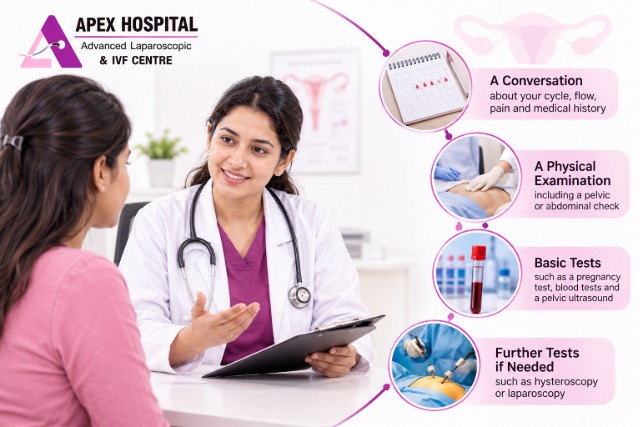
Don’t be nervous. A typical visit includes:
- A conversation about your cycle dates, flow, pain, weight changes, stress, medicines and family history. Bring your period diary.
- A physical examination, including a pelvic or abdominal check where appropriate.
- Basic tests, usually a pregnancy test, blood tests such as thyroid levels and hormone profile, and a pelvic ultrasound.
- Further tests if needed, such as hysteroscopy or laparoscopy, which our laparoscopic surgery team can perform when a structural problem is suspected.
How Are Irregular Periods Treated?
Treatment depends entirely on the cause, and the NHS notes that treatment isn’t always needed. Examples include:
- Hormonal treatment such as the combined pill to regularise cycles in PCOS
- Medicines for thyroid disorders
- Lifestyle changes, including balanced nutrition, steady weight and managing stress
- Surgery for fibroids, polyps or endometriosis when needed
- Ovulation induction if you’re trying to conceive
Simple Habits That Help
- Track your periods for at least three months
- Eat regularly and avoid crash diets
- Keep exercise balanced, not extreme
- Prioritise sleep and find a stress outlet you actually enjoy
- Don’t take hormonal tablets, including emergency pills, repeatedly without advice
Frequently Asked Questions
Is it normal to have an irregular period once in a while?
Yes. Occasional variation is common, especially after stress, travel or illness.
What are the main causes of irregular periods?
The most common are puberty, perimenopause, PCOS, thyroid problems, stress, weight changes, contraception changes and pregnancy.
Can stress alone cause a missed period?
Yes. Stress can delay ovulation and therefore delay your period.
When should I worry about missing a period?
If you’ve missed three in a row and aren’t pregnant, or if irregular cycles come with other symptoms, see a doctor.
Do irregular periods mean I can’t get pregnant?
Not necessarily, but they can make conception harder, so it’s worth checking if you’re trying.
Final Thoughts
Irregular periods are common, and most causes are treatable. The key is to notice the pattern, track it and get it checked when something changes suddenly or other symptoms appear. If you’re in Sirsa or nearby and want answers, you can call +91 9619642000 or book an online consultation. Our gynaecology department is ready to help.