Samosa. Papad. Palak. Chai. Your plate looks perfectly normal. Then a scan shows a stone, and suddenly every meal feels like a question. If you’ve searched for foods to avoid kidney stones, you’ve probably found two kinds of advice. Cut everything. Or eat anything.
Neither is right. Diet doesn’t cause every stone, and it can’t dissolve one that’s already there. But it can change your odds of getting the next one. The trick is knowing which foods actually matter, and which are myths.
In this blog, Apex Hospital, Sirsa, Haryana, will give you the real list. Using Indian foods you see every day. We will also tell you what you shouldn’t cut at all.
Before You Cut Anything: Your Stone Type Matters
Not every stone responds to the same diet. Most are calcium oxalate stones, but others are made of uric acid, calcium phosphate or struvite. The National Institute of Diabetes and Digestive and Kidney Diseases (NIDDK) says that depending on your stone type, changing how much sodium, animal protein, calcium or oxalate you eat may help prevent new stones.
That’s why a blanket “avoid this list” can mislead. Our guide on kidney stone types, symptoms and causes explains how types differ. If you’ve had your stone analysed, ask your urologist which foods apply to you.
Foods to Avoid with Kidney Stones: The Core List
These are the foods and habits that most often make the list for stone formers.
1. Too much salt
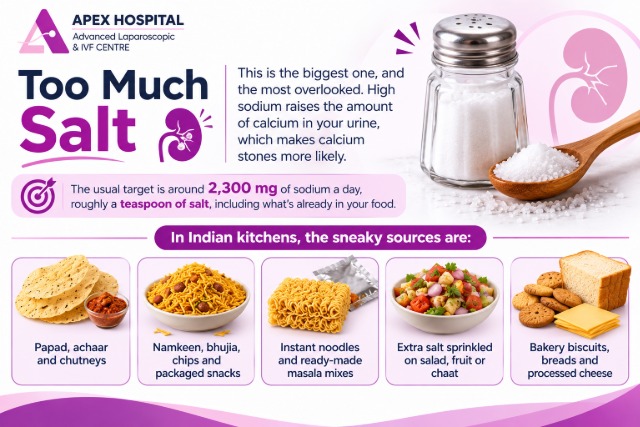
This is the biggest one, and the most overlooked. High sodium raises the amount of calcium in your urine, which makes calcium stones more likely. The usual target is around 2,300 mg of sodium a day, roughly a teaspoon of salt, including what’s already in your food.
In Indian kitchens, the sneaky sources are:
- Papad, achaar and chutneys
- Namkeen, bhujia, chips and packaged snacks
- Instant noodles and ready-made masala mixes
- Extra salt sprinkled on salad, fruit or chaat
- Bakery biscuits, breads and processed cheese
2. Large amounts of animal protein
Meat, fish, eggs and poultry produce acid that lowers citrate in your urine. Citrate is a natural stone blocker, so less of it raises your risk. You don’t have to go vegetarian. Just keep portions moderate, and don’t make mutton, chicken or fish the star of every meal. Swapping some meals for dal, rajma-free lentil dishes or chana is a simple fix, since lentils and beans are high in protein and lower in oxalate.
3. High-oxalate foods (if your doctor says so)
This is where most confusion starts. Oxalate-rich foods can feed calcium oxalate stones, but only if your urine oxalate is high. The National Kidney Foundation names spinach, Swiss chard, almonds, navy beans, beets and rhubarb as the very high-oxalate foods worth limiting in that case.
In Indian terms, that usually means going easy on:
- Palak (spinach), especially in large portions or as a daily juice
- Beetroot
- Almonds, particularly large handfuls
- Strong chai and heavy tea intake
- Chocolate and cocoa-heavy sweets
- Peanuts and shakarkandi (sweet potato), in big amounts
Here’s the good news. You don’t have to quit these entirely. Pair them with calcium. Palak paneer, for instance, puts calcium and oxalate in the same meal, so they bind in your gut before reaching your kidneys.
4. Sugary drinks and colas
Soft drinks, packaged fruit juices, sweetened sharbat and sugary lassi add sugar load without helping hydration. Frequent sweetened-drink habits are linked with a higher stone risk. Plain water, nimbu pani without too much sugar, and buttermilk are better picks.
5. Alcohol and purine-rich foods
If your stone is made of uric acid, or your blood uric acid runs high, organ meats (kaleji, gurda), sardines and beer are worth cutting back. Alcohol also dehydrates you, which makes every kind of stone easier to form.
6. Vitamin C and calcium supplements
Food is fine. Pills are different. High-dose vitamin C supplements can raise urine oxalate, and extra calcium tablets can raise stone risk, unlike the calcium in food. Don’t start either without asking your doctor.
Foods You Should Not Cut
This is the part most people get wrong, and it’s where “foods to stay away from with kidney stones” lists often mislead.
- Calcium from food. Don’t skip milk, dahi, paneer or buttermilk. A low-calcium diet can actually raise the risk of calcium oxalate stones. The National Kidney Foundation suggests around 1,000 to 1,200 mg of calcium a day from food for most people with calcium stones.
- Fruits and vegetables. They carry potassium, magnesium and citrate, which help block stone formation. Don’t ban them because a few are high in oxalate.
- Water. Dehydration is the single biggest trigger. Many doctors suggest 2.5 to 3 litres of fluid a day, unless a medical condition limits it. Pale urine is your simple check.
- Lemon and citrus. They help prevent stones by raising urine citrate. They won’t dissolve a stone that’s already formed, which is one of the points in our post on kidney and gallbladder stone myths.
For more ideas, our list of foods that promote kidney health has easy additions.
Quick Reference: Foods You Should Not Eat Too Much of With Kidney Stones
| Category | Limit or avoid | Better swap |
| Salty snacks | Papad, namkeen, chips, instant noodles | Roasted chana, fresh fruit, unsalted nuts in small amounts |
| Pickles and sauces | Achaar, ketchup, packaged chutneys | Fresh mint or coriander chutney with minimal salt |
| Heavy proteins | Daily mutton, organ meat, large egg or fish portions | Dal, lentils, paneer, curd |
| High-oxalate foods | Large portions of palak, beetroot, almonds, strong tea | Smaller portions, paired with curd or paneer |
| Drinks | Colas, packaged juice, sweet lassi, alcohol | Water, buttermilk, nimbu pani with little sugar |
| Supplements | High-dose vitamin C, calcium pills | Food sources, unless your doctor advises otherwise |
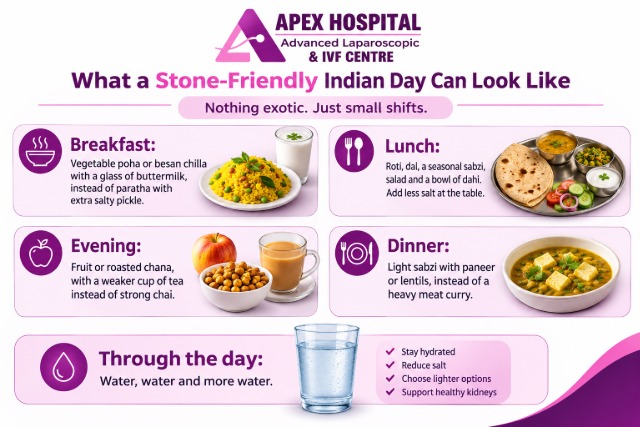
What a Stone-Friendly Indian Day Can Look Like
Nothing exotic. Just small shifts.
- Breakfast: Vegetable poha or besan chilla with a glass of buttermilk, instead of paratha with extra salty pickle.
- Lunch: Roti, dal, a seasonal sabzi, salad and a bowl of dahi. Add less salt at the table.
- Evening: Fruit or roasted chana, with a weaker cup of tea instead of strong chai.
- Dinner: Light sabzi with paneer or lentils, instead of a heavy meat curry.
- Through the day: Water, water and more water.
When Diet Isn’t Enough
Food helps prevent stones. It can’t treat a stone that’s already causing trouble. Seek care quickly if you have severe pain, fever, repeated vomiting or blood in your urine. Our list of signs you need kidney stone surgery explains when to stop waiting.
Stones that are too big or stuck often need a procedure. At Apex, our urology department uses URS ureteroscopy for stones in the ureter and smaller kidney stones, and PCNL surgery for larger ones. Once the stone is cleared, the diet above helps keep it from coming back.
Frequently Asked Questions About Foods to Avoid with Kidney Stones
Should I stop eating spinach completely?
Not necessarily. It matters mostly if you form calcium oxalate stones and your urine oxalate is high. Keep portions moderate and pair it with calcium-rich foods like paneer or curd.
Is it true I should avoid calcium if I have stones?
No. Cutting calcium can backfire. Eat calcium from food, and avoid extra calcium supplements unless your doctor advises them.
Are tomatoes bad for kidney stones?
There’s no strong evidence that tomatoes cause stones. Focus on salt, animal protein and fluids first.
Does lemon water dissolve kidney stones?
No. It may help prevent new stones by raising citrate in urine, but it won’t dissolve an existing one.
How much water should I drink?
Many doctors suggest 2.5 to 3 litres of fluid a day. Aim for pale urine, and check with your doctor if you have heart or kidney conditions that limit fluids.
Foods to Avoid Kidney Stones: Where This Leaves You
The best list of foods to avoid kidney stones isn’t long, and it isn’t extreme. Cut the excess salt. Keep animal protein moderate. Go easy on high-oxalate foods if your doctor says your stone type needs it. Skip the sugary drinks and the supplement pills. Then protect what helps: calcium from food, plenty of fruit and vegetables, and lots of water. Remember, diet lowers your risk. It doesn’t replace treatment for a stone that’s already causing pain. If you’re unsure which advice applies to your stone type, call Apex Hospital, Sirsa on +91 9619642000, or book through Online OPD, and get a plan built around your reports.