Keyhole, Not Open Surgery
Fast Recovery & Short Hospital Stay
Karl Storz EndoVision Precision

PCNL Surgery for Kidney Stones in Haryana
A large kidney stone can stop your life in its tracks. The pain comes in waves, often radiating from the back down to the groin, and no amount of home remedies or painkillers seems to make it go away. For stones that are too big to pass on their own, PCNL surgery in Sirsa at Apex Hospital offers a proven, minimally invasive way to clear them completely — without open surgery and without a long hospital stay.
For more than 25 years, our urology hospital in Sirsa has been treating patients across Sirsa, Hanumangarh, and the wider Haryana, Punjab, and Rajasthan belt. Kidney stones are one of the most common problems we see in this region, partly because of the hard water and dry climate. The good news is that even the largest, most stubborn stones are very treatable when handled by an experienced team. PCNL is the gold-standard procedure for exactly these cases, and it’s performed here by Dr. R.K. Mehta, one of the most respected urologists and laparoscopic surgeons in North India.
"Most patients put off treatment for large stones because they're scared of surgery. But PCNL isn't open surgery — it's a small keyhole. The sooner we treat a big stone, the less damage it does to the kidney. There's rarely a good reason to wait."
 — Dr. R.K. Mehta, MS, DNB, FIAGES │ Founder & Chief Surgeon, Apex Hospital
What Is PCNL?
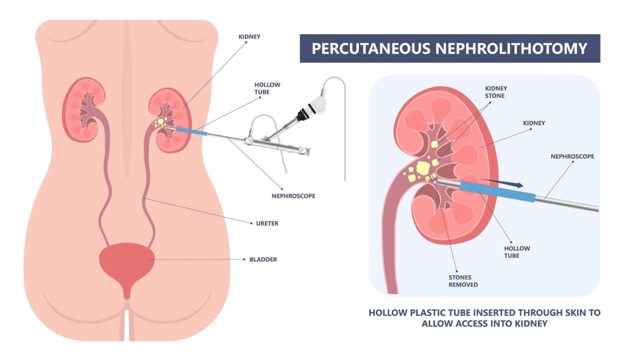
PCNL stands for Percutaneous Nephrolithotomy. The word sounds complicated, but the idea behind it is simple. Instead of making a large cut to reach the kidney, the surgeon makes a small keyhole incision usually less than a centimetre in your back. A thin instrument called a nephroscope is passed through this opening directly into the kidney, allowing the stone to be located, broken up, and removed.
Because the whole procedure works through one small opening, there’s far less cutting, less bleeding, and a much quicker recovery than the open kidney surgeries of the past. It’s done under anaesthesia, so you feel nothing during the procedure itself.
When Is PCNL the Right Choice?
PCNL isn’t needed for every kidney stone. Small stones often pass naturally with plenty of water and medication, and stones lodged in the ureter are usually handled with URS ureteroscopy. PCNL becomes the preferred option in specific situations:
Large kidney stones, typically bigger than 2 cm
Staghorn stones that fill the inner branches of the kidney
Hard, dense stones that are unlikely to break with other methods
Stones that haven't cleared after shockwave treatment (ESWL)
Stones causing repeated infections or blocking urine flow from the kidney
If a scan has shown you have a large stone, it’s worth getting a proper opinion rather than waiting and hoping it passes. A stone that blocks the kidney for too long can quietly damage it.
How PCNL Is Done at Apex Hospital
Every PCNL case at Apex begins with proper imaging, usually a CT scan, so we know the exact size, number, and position of the stones before we begin. This planning matters. It’s what allows us to clear stones completely in a single sitting in most cases.
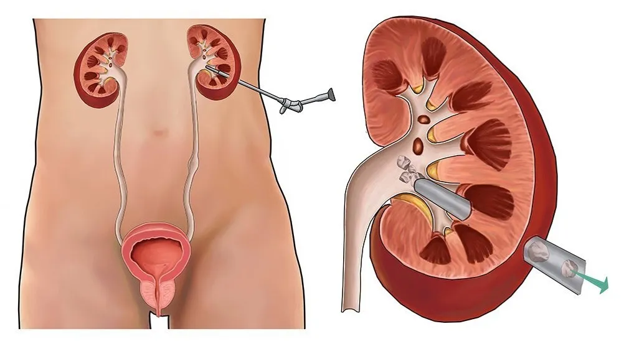
During the procedure, Dr. R.K. Mehta creates a small tract into the kidney under live imaging guidance. The stone is then broken into fragments using laser or pneumatic energy, and the pieces are removed through the same tract. At the end, a small drainage tube may be placed temporarily to help the kidney heal. Most patients are up and walking the next day and go home within two to three days.
Apex Hospital is equipped with the Karl Storz EndoVision system and modern digital imaging, which gives the surgical team a clear, magnified view throughout. That precision is a big part of why our stone-clearance rates are high and complications are low.
Recovery After PCNL
Recovery from PCNL is genuinely quick compared to what most people expect from kidney surgery. There’s usually some mild discomfort around the keyhole site and a bit of blood in the urine for a few days — both completely normal. Most patients return to light daily activities within a week and feel fully back to normal in two to three weeks.
We’ll also look at why the stone formed in the first place. Many people in this region form stones repeatedly, and a few simple changes to water intake and diet can dramatically reduce the chance of it happening again. Preventing the next stone matters as much as removing this one.
Beyond Stones — Comprehensive Urology and Surgical Care
Kidney stones are just one part of what we do. Apex is a full multi-specialty hospital, which means complex cases can draw on more than one department when needed.
Advanced Laparoscopy Under One Roof
The same minimally invasive philosophy behind PCNL runs through our laparoscopic surgery department, where Dr. R.K. Mehta performs gallbladder, hernia, and other keyhole procedures. Patients who need both urological and general surgical care don't have to travel between hospitals.
Fertility and Women's Health
For couples where fertility is a concern, our IVF centre in Haryana and gynecology department, led by Dr. Manisha Mehta, work alongside urology. Apex holds the region's first IVF, ICSI, and PESA babies — milestones that reflect the depth of experience under this one roof.
Why Patients Choose Apex Hospital for Kidney Stone Treatment in Sirsa
There are several places to get a kidney stone treated across Haryana. Here’s why patients from Sirsa, Fatehabad, Ellenabad, Hanumangarh, and as far as Bathinda keep coming to Apex
Twenty-five years of surgical experience means this is not a new setup learning on the job — Dr. R.K. Mehta has performed a very large number of PCNL and stone-removal procedures. We default to minimally invasive techniques wherever possible, which is why hospital stays here are short and recovery is fast. Our equipment is genuinely world-class, and with two locations in Sirsa and Hanumangarh, expert care stays close to home for patients across the region.

FAQs
No. PCNL is minimally invasive. It needs only a small keyhole incision in the back, not the large cut required for open kidney surgery. Most patients are discharged within two to three days and recover quickly. It’s the standard of care for large kidney stones and has a very high stone-clearance rate.
PCNL is usually recommended for kidney stones larger than 2 cm, for staghorn stones, and for hard stones that other methods can’t clear. Smaller stones in the ureter are often treated with URS instead. After reviewing your scan, Dr. R.K. Mehta will recommend the right approach for your specific case.
PCNL is designed to protect the kidney. The keyhole tract is small and made under imaging guidance to avoid important structures. In fact, removing a large stone that’s blocking the kidney usually protects kidney function in the long run, since a stone left in place for too long can cause more harm.
Most patients walk the next day, go home within two to three days, and return to normal activities within two to three weeks. Mild discomfort and some blood in the urine for a few days afterward are normal and settle on their own.
They can, especially in this region where hard water and diet play a role. That’s why we don’t stop at removing the stone — we look at why it formed and guide you on water intake and diet changes that significantly lower the chance of new stones. Regular follow-up helps catch any new stone early.
Call Apex Hospital at +91 91680 39000, or fill out the appointment form at apexhospitalsirsa.com/contact. The team will help you schedule a consultation at either the Sirsa or Hanumangarh centre.